

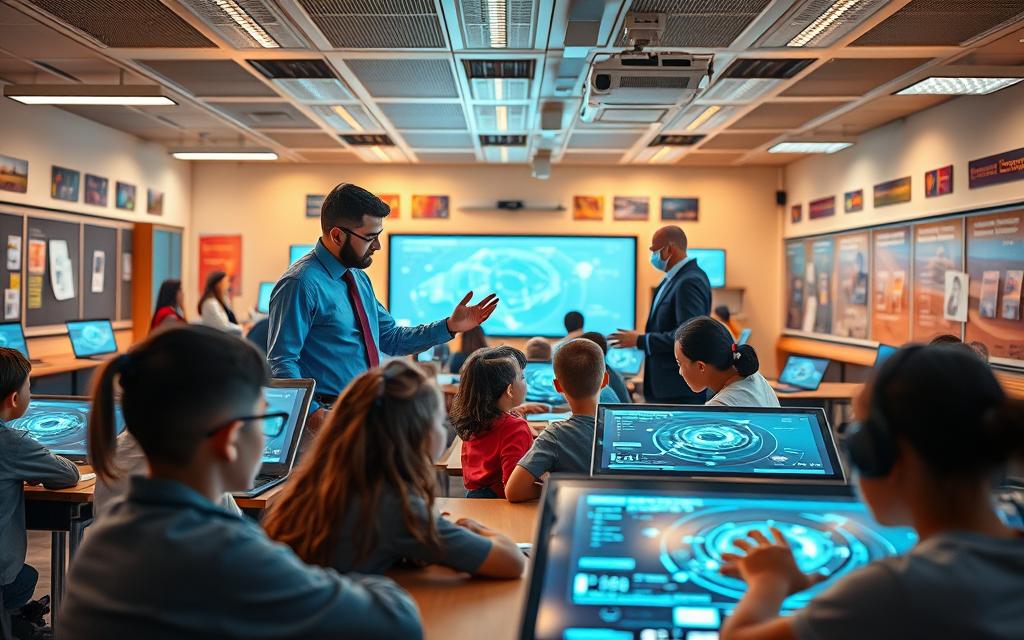
The digital revolution has changed classrooms in the United States. Now, old teaching methods mix with new tools to make learning exciting.
This mix brings big educational benefits that help students do better. Digital tools let teachers teach in ways that fit each student’s learning style.
Teachers use these tools to see how students are doing and change their teaching. This makes students more interested and helps them remember what they learn.
These changes in technology in education lead to better learning outcomes. Students get to think critically through interactive lessons and group work.
It also makes learning available to everyone. Using technology wisely makes learning more inclusive and effective for all.
The Transformation of Education Through Technology
Education has changed a lot, moving from old teaching methods to new digital ones. This change is one of the biggest in modern learning.
Historical Shifts in Educational Tools
Education has moved from simple tools to advanced technology. Early classrooms used basic resources that limited teaching and student interest.
From Chalkboards to Smartboards: Key Advancements
Chalkboards were used for years. But digital whiteboards changed classrooms a lot.
Related Posts:
- How Technology Will Change Architecture in the…

- What Is Appropriate Technology Sustainable Solutions…

- How Technology Has Improved Transportation Safety…

- What Is a Head of Technology Leadership in the Tech Industry

- Information Technology in the Hospitality Industry…

- Do You Need Calculus for Information Technology Math…

Smartboards now make learning interactive. Teachers can:
- Display multimedia content instantly
- Save and share lesson materials digitally
- Encourage student interaction through touch screens
- Access online resources during lessons
Tablets and iPads have also changed learning. They give students quick access to lots of educational content.
| Era | Primary Tools | Key Limitations | Advancements Introduced |
|---|---|---|---|
| Pre-2000s | Chalkboards, textbooks | Static content, limited resources | Basic visual aids |
| 2000-2010 | Overhead projectors, computer labs | Limited access, scheduled usage | Digital content sharing |
| 2010-Present | Smartboards, tablets, cloud platforms | Initial implementation costs | Real-time collaboration, personalised learning |
Emerging Trends in Modern Classrooms
Today’s classrooms keep changing with new tech. These changes make learning more dynamic and effective.
The Role of Artificial Intelligence and Data Analytics
Artificial intelligence is key in modern education. AI looks at how students do to find out what they need to work on.
Data analytics helps teachers understand their classrooms better. It shows them:
- How each student is doing
- What teaching methods work best
- Where students need more help
- The best pace for different groups
AI helps make learning personal for more students. Learning platforms adjust to how well students are doing.
Using data to make decisions has changed how schools plan. Now, they use analytics to improve teaching and support for students.
These tech changes are making learning better for students all over the world.
How is Technology Beneficial to Education
Technology has changed education by making learning available to everyone, no matter where they are or how much money they have. It solves two big problems in old education systems. These are not enough resources and teaching everyone the same way.
Expanding Access to Educational Materials
The internet has changed how we get learning materials. It makes lots of educational resources available instantly. These resources used to be only in libraries or special databases.
This new access to education helps students from far-off places or those who don't have much money. They can now get the same quality education as students in big cities. Calculus information math requirements also becomes relevant when this topic is compared with nearby questions around beneficial education enhancing. This is a big win for education equality thanks to technology.
Digital Resources: Khan Academy and JSTOR
Khan Academy shows how technology can give free, top-notch education to millions. It has lessons on many subjects, with practice and videos.
JSTOR gives digital access to thousands of journals, books, and primary sources. These were only in university libraries before. Now, they help learners at all levels.
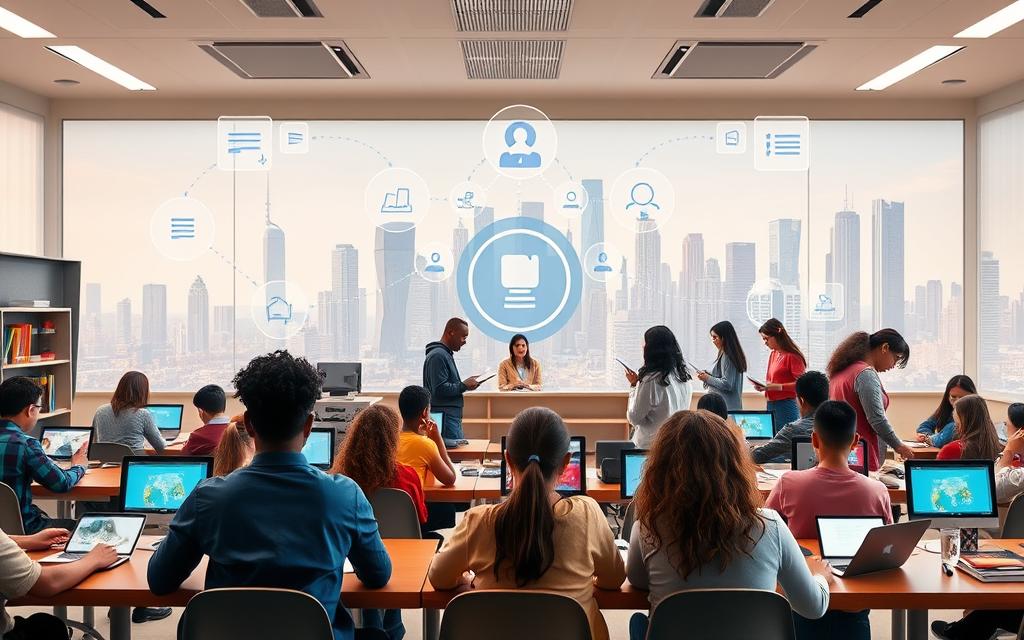
There are now so many learning materials available. As research says, “Today, lots of information is just a click away. And learning opportunities are available online all over the world.”
Enabling Personalised Learning Pathways
Technology helps make learning personal. It changes to fit each student’s needs, pace, and learning style. This is different from the old way where everyone learned the same thing at the same time.
Adaptive learning systems check how well students are doing and change the learning to match. This way, students learn at their own speed. It helps them feel more confident and not get stuck.
Adaptive Technologies: Dreambox and Century Tech
Dreambox Learning is a new way to learn math. It uses smart technology to adjust the learning path based on how students do. It’s very effective.
Century Tech uses AI and brain science to make learning personal in many subjects. It finds out what students don’t know and gives them the right help.
These technologies have many benefits:
- They check learning without tests
- They give feedback right away
- They let students learn at their own pace
- They give insights to both students and teachers
| Adaptive Platform | Primary Subject Focus | Key Features | Best For |
|---|---|---|---|
| Dreambox | Mathematics | Game-based learning, intuitive interface | Primary and middle school students |
| Century Tech | Multiple subjects | AI-powered recommendations, neuroscience-based | Secondary students and beyond |
| Khan Academy | Comprehensive subjects | Free access, extensive video library | All age groups and levels |
Using these adaptive technologies shows how digital tools can make learning personal. They go beyond old ways of teaching. They offer support that fits each student’s needs.
Boosting Student Engagement and Collaboration
Technology has changed how students learn and interact. Digital tools make learning fun and interactive. This is a big step forward in education.
Interactive and Gamified Learning Environments
Gamification turns lessons into fun challenges. Educational games and platforms make learning enjoyable. This boosts motivation and helps students remember more.
Research shows gamified education can increase participation by up to 60%. Students enjoy earning points and badges, making learning more engaging.
Examples: Kahoot! for Quizzes and Minecraft Education Edition for Creativity
Kahoot! is a hit in classrooms for quiz games. Teachers create quizzes that students play on their devices. It makes learning fun and interactive.
Minecraft Education Edition boosts student engagement with creative projects. Students build and explore in a virtual world. It makes learning hands-on and memorable.
“Using devices like a computer, tablet, or other type of technology in your classroom can help turn traditionally dull subjects into interactive and fun activities.”
Fostering Teamwork with Digital Tools
Modern tech promotes collaborative learning through shared spaces. Students work together, no matter where they are. This prepares them for future careers.
Studies show tech helps students support each other more. Teachers have seen students helping each other more when using technology.
Platforms like Google Classroom and Microsoft Teams for Education
Google Classroom makes sharing and feedback easy. Teachers can work on documents with students. This encourages teamwork and dialogue.
Microsoft Teams for Education offers virtual classrooms. It has video calls, file sharing, and assignments. It also has features for all students to participate.
These tools make collaborative learning easier. As shown in this research on technology improving student engagement, digital platforms foster peer interaction.
| Platform | Primary Function | Collaboration Features | Impact on Engagement |
|---|---|---|---|
| Kahoot! | Interactive quizzes | Real-time competition | High participation rates |
| Minecraft Education | Creative projects | Shared building spaces | Deep conceptual understanding |
| Google Classroom | Assignment management | Simultaneous document editing | Continuous feedback loop |
| Microsoft Teams | Virtual classroom | Breakout rooms & file sharing | Inclusive participation |
Technology helps with student engagement and collaborative learning. It creates environments where students support each other. They also develop important 21st-century skills.
Empowering Educators and Streamlining Operations
Technology has changed how teachers teach and manage their work. It makes learning environments more efficient. Modern tools give teachers powerful resources to improve teaching and cut down on paperwork.
Enhancing Assessment and Feedback Mechanisms
Digital platforms have changed how we assess students. They make evaluations more accurate and quick. Teachers can give feedback right away, helping students grasp ideas better.
Tools such as Turnitin for Plagiarism Checks and Quizlet for Study Aids
Turnitin is key for catching plagiarism, keeping schools honest. Quizlet helps students learn with interactive tools like flashcards and tests.
These tools help with both checking work and helping students improve. They let teachers focus more on teaching than paperwork.

Leveraging Data for Improved Teaching Strategies
Data analytics in education gives insights into how students learn. Teachers can spot where students need help and change their teaching.
Most teachers, 84%, use online resources every week to find interesting content. This shows how tech helps teachers grow and get better at their job.
Learning Management Systems: Canvas and Moodle in Practice
Learning management systems like Canvas and Moodle are key in today’s schools. They help organise lessons, track student progress, and make communication easier.
Southern Methodist University uses Canvas for its courses. It lets teachers:
- Keep an eye on how each student is doing
- Share materials and tasks easily
- Give feedback that’s tailored to each student
These systems are the future of school management. They make places where teachers and students can do their best.
Conclusion
Technology has changed learning for the better. It makes learning more accessible, engaging, and tailored to each student. Tools like eBooks and online databases help students learn at their own speed.
Technology benefits support different learning styles. This helps students dive deeper into subjects they’re interested in.
Teachers can use digital tools to improve their teaching. They can also make their work easier. With data, they can give better feedback and check students’ progress.
Thanks to technology, students and teachers can work together from anywhere. This makes learning a global experience.
The future of education looks bright with AI, VR, and AR. These technologies will make learning more immersive and personal. It’s important for teachers to use these tools to help students learn better.
In short, technology makes education better for everyone. It helps both students and teachers. By embracing these changes, quality education can reach everyone, everywhere.