


In today’s world, a big movement is happening. It puts people and the planet first, not just fancy tech. This is called appropriate technology. It’s a big change in how we tackle global problems.
This idea means choosing tech that’s simple, cheap, and easy to do by hand. It’s made to save energy and protect the environment. It also keeps control in local hands.
The idea is to make tools and systems that work well and are good for the economy and culture. This way, solutions really help communities.
This approach is also known as intermediate technology. It mixes old ways with new ideas. It gives communities the power to solve their own problems, without needing complicated, foreign systems.
Defining What Is Appropriate Technology
Understanding appropriate technology means looking at its role in sustainable community development. It’s about finding solutions that fit local needs and resources. This approach avoids using high-tech from other countries, instead focusing on tools that communities can manage and afford.
Origins and Evolution of the Concept
The history of appropriate technology began with anti-colonial movements and early development ideas. Mahatma Gandhi played a key role, pushing for self-reliance in villages. He believed in using simple, local technologies to empower rural areas, not make them dependent on outside systems.
Economist E.F. Schumacher later shaped these ideas into a clear framework. He called it ‘intermediate technology,’ aiming for a middle ground between old ways and modern tech. Schumacher’s work highlighted the need for technologies that fit local conditions, not just any technology.
In 1973, E.F. Schumacher published Small Is Beautiful: A Study of Economics As If People Mattered. This book was a big hit, challenging traditional development ideas. It promoted technologies that are human-sized, not massive industrial ones.
Related Posts:
- What Is a Head of Technology Leadership in the Tech Industry

- How Technology Will Change Architecture in the…

- How Technology Has Improved Transportation Safety…

- Information Technology in the Hospitality Industry…

- Do You Need Calculus for Information Technology Math…

- How Technology Is Beneficial to Education Enhancing…

The movement got a boost with the Intermediate Technology Development Group (ITDG), started by E.F. Schumacher in 1966. Now known as Practical Action, it keeps pushing for small, decentralised, and labour-intensive technologies. The shift from Gandhi’s ideas to Schumacher’s shows a big leap in thinking about development.
Today, Gandhi appropriate technology and Schumacher’s ideas shape sustainable development globally. The idea has grown to include environmental and social justice aspects. This shows that technology should meet human needs while protecting the planet.
Core Principles of Appropriate Technology
Appropriate technology is built on three key pillars. These ensure its solutions are effective in development settings. They are not just technically good but also good for the environment, affordable, and socially accepted.
Sustainability and Environmental Considerations
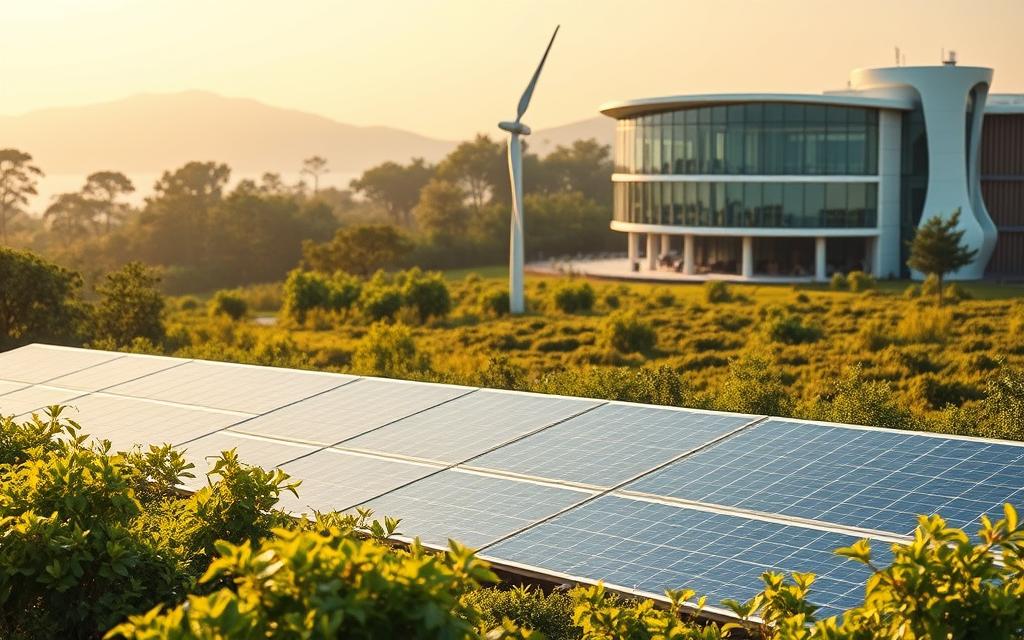
Environmental care is at the heart of appropriate technology. It focuses on using energy wisely and reducing harm to nature through smart design.
It prefers renewable over finite resources. Systems are easy to set up and keep running, helping both nature and people.
The method is about ‘energy efficient, environmentally sound, people-centred, and locally controlled projects’. This means technologies work with nature, not against it.
Economic Viability and Affordability
True appropriate technology must be affordable for the communities it helps. Being affordable is key to its success.
These solutions need little money to start and don’t drain community resources. They also create jobs locally, not relying on outsiders.
The economic model is about sustainable ownership and maintenance. Communities can manage and fix technologies without needing constant outside money.
Social and Cultural Appropriateness
Technology must fit with local values and ways of life to be accepted. This ensures solutions are wanted, not forced.
Successful projects understand and respect local culture and politics. They empower users and don’t make them dependent.
The best culturally appropriate technology comes from involving the community in design. Local ideas and needs shape the final product.
These three principles—environmental care, economic value, and cultural fit—are linked. When balanced, they create technology that meets community needs and protects resources for the future.
Examples of Appropriate Technology in Practice
Across the world, appropriate technology shows its worth with real solutions to real problems. It shows that we don’t always need complex tech. The history of this movement has led to many successes in different areas.
Renewable Energy Solutions: Solar and Wind Power
Small renewable energy systems are big in energy-poor areas. Solar lanterns have replaced kerosene lamps, giving cleaner, safer light. They charge in the day and light up homes at night.
Solar water heaters use simple heat tech to give hot water without electricity. They work by placing dark water tanks in sunlight, sometimes with reflective surfaces. This cuts down on wood or charcoal use for heating water.
Small wind turbines are another good solution. They’re made and fixed locally, unlike big commercial ones. They power things like water pumps, small mills, and battery chargers.
| Technology | Primary Application | Key Benefits | Implementation Scale |
|---|---|---|---|
| Solar Lanterns | Household Lighting | Replaces kerosene, reduces fire risk | Individual Households |
| Solar Water Heaters | Domestic Hot Water | Reduces fuel consumption, low maintenance | Household/Community |
| Small Wind Turbines | Local Power Generation | Off-grid electricity, water pumping | Village Level |
| Solar-Powered Pumps | Irrigation & Drinking Water | No fuel costs, reliable operation | Farm/Community |
Water and Sanitation Technologies
Clean water and proper sanitation are big challenges in many places. Technologies in this area focus on being simple, durable, and easy to maintain locally. Hand-powered pumps are a key water pump technology that communities can fix and use easily.
Rainwater harvesting systems collect and store rainwater for homes and farms. They range from simple barrels to complex underground tanks with filters. They help during dry times and reduce the need for distant water sources.
“The treadle pump enabled small farmers to irrigate larger plots, increasing food production and household incomes significantly throughout South Asia and Africa.”
Composting toilets turn human waste into fertiliser. They prevent water pollution and give nutrients for farming. They’re great in places where flushing toilets aren’t possible.
Agricultural Innovations: Low-Cost Tools and Techniques
Agricultural tech boosts productivity while being kind to the environment and the wallet. The universal nut sheller makes processing nuts like peanuts and shea nuts easier. It cuts down on manual work and helps local industries and farmers.
Treadle pumps let farmers use groundwater with just their feet. They don’t need fuel or electricity. This has changed farming in many places.
Simple tools for planting seeds make farming better. They plant seeds at the right depth and spacing. This increases crop success and yield. They’re a great example of agricultural tools development that’s affordable.
These examples show how tech can solve problems in a way that fits local needs. It’s not always about the most advanced tech, but the best one for the job.
Benefits of Implementing Appropriate Technology
Using the right technology brings big wins for our planet, economy, and people. It helps us grow in a way that’s good for the environment and respects local needs.
Environmental Advantages and Reduced Carbon Footprint
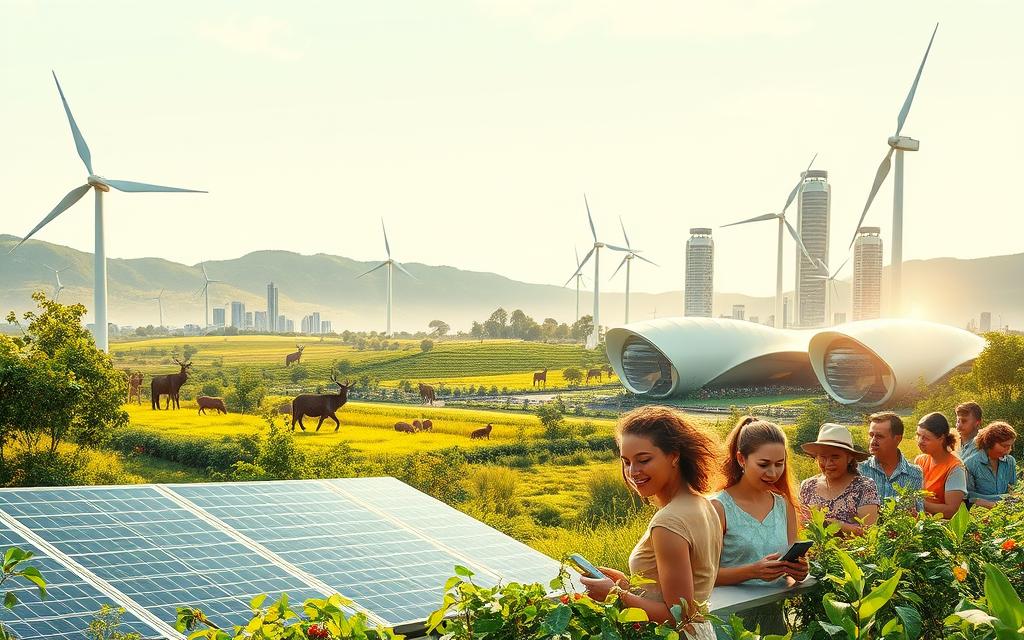
Good technology cuts down on harm to our planet. It uses resources that can be renewed, like the sun and wind.
These green technologies don’t rely on dirty fossil fuels. Instead, they use clean energy. This cuts down on pollution and protects our natural world.
“The AT will have a beneficial effect on income distribution and productivity… uses only renewable resources… compatible with nature and the environment.”
These technologies also help us save resources. They make sure we use water wisely, reduce waste, and use materials in a way that’s good for the planet. This makes our communities cleaner and healthier.
Economic Empowerment and Job Creation
When communities use the right technology, their local economies grow. This creates jobs and chances for people to start their own businesses.
These small technologies need to be made and fixed locally. This means more jobs stay in the community. Money also stays local, helping the economy grow.
The table below shows how technology can boost the economy in different areas:
| Sector | Job Opportunities | Local Economic Impact | Skill Development |
|---|---|---|---|
| Renewable Energy | Solar panel installation | Reduced energy costs | Technical maintenance skills |
| Water Management | Well maintenance crews | Improved agricultural yield | Water system engineering |
| Agricultural Tools | Tool manufacturing | Increased food production | Metalworking and design |
| Sanitation Systems | Waste management services | Health cost reduction | Public health training |
This way of growing the economy keeps money and jobs in the community. It helps us be self-sufficient, not dependent on others.
Social Inclusion and Community Development
Good technology brings people together and helps everyone have a say. It’s made with the community in mind, respecting their culture and needs.
It also helps those who were left behind get access to technology. This makes things fairer and reduces differences in the community.
Technology helps local groups get stronger. People learn to make decisions and get better at using technology together.
Technology that includes everyone has big benefits. It improves health, education, and overall happiness in the community.
Challenges and Criticisms of Appropriate Technology
Appropriate technology has many benefits, but it faces big challenges. These include technical issues, social acceptance problems, and money troubles.
Technological Limitations and Scalability Issues
One big criticism is that people see appropriate technology as not as good as other solutions. This makes it hard to get people to use it, even when it’s perfect for their needs.
Another problem is making technology work in different places. Solutions that work in one area might not work well in another. Keeping these systems running for a long time is also a big challenge.
Scaling up these solutions is hard too. Starting small can work, but growing them to help more people is tough. This limits how much impact these technologies can have.
Cultural Resistance and Adoption Barriers
Getting people to accept new technology is a big challenge. Communities might not want to change because of their culture or doubts about new ideas. These barriers can stop even good projects.
Seeing technology as only for the poor can also hold people back. This negative view stops communities from using technology that could really help them.
Being far away and having trouble getting help also slows down adoption. Communities in remote areas often struggle to get the support and parts they need. This makes them wary of new technology.
Funding and Resource Constraints
Finding enough money is a big problem for technology projects. Keeping donors interested for the long term is hard. This makes it hard to keep projects going.
Not enough money means projects can’t be done well or fully. It affects everything from the quality of materials to training. This is key for success.
Lack of support from institutions makes things even harder. Without strong backing, projects can’t be properly monitored and improved. This is a big setback.
These challenges show how hard it is to make appropriate technology work. Knowing these problems helps us find ways to overcome them. This way, we can make sustainable development projects more effective.
How to Implement Appropriate Technology in Communities
Getting appropriate technology right needs a careful plan that fits local needs. This guide shows how to bring sustainable solutions to different places.
Assessing Local Needs and Resources
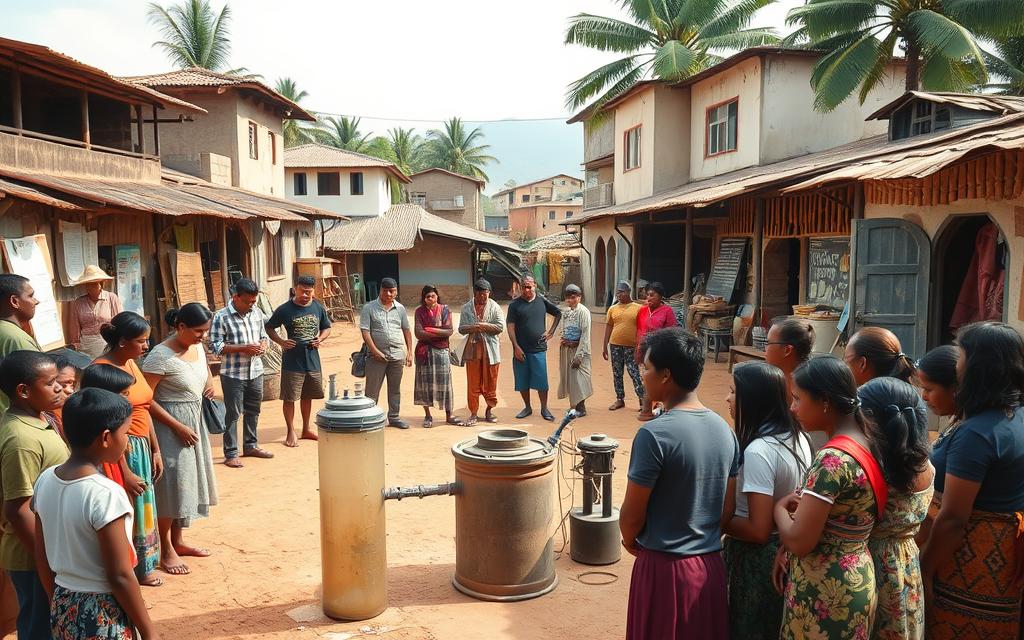
First, you must understand what the community really needs. This means talking to them directly, not guessing what they might want.
Good assessment includes:
- Running workshops and focus groups
- Listing what materials and resources are available
- Finding out what skills people already have
- Learning about local culture and society
This way, the technology meets real needs and uses what’s already there. It makes communities feel like they’re part of the project from the start.
Selecting and Adapting Technologies
Choosing the right tech is more than just picking something from a list. You need to think about how it fits the local scene, like the environment and culture.
Often, you’ll need to tweak the tech to make it work better. This might mean changing materials or how it’s used. The goal is to create a solution that’s easy to use and maintain.
Technology starts with a need… It doesn’t stand alone… It needs a technology that fits, a complete package.
Good adaptation mixes technical skills with cultural sensitivity. This way, the community will use and keep the tech for a long time.
Training and Capacity Building
Training is key to making sure people can handle the tech on their own. It’s not just about knowing how to use it, but also feeling confident and skilled.
Good training covers:
| Training Type | Key Focus Areas | Duration |
|---|---|---|
| Technical Operation | Daily use, safety, basic fixes | 2-5 days |
| Maintenance Skills | Keeping it running, parts, repairs | 3-7 days |
| Management Training | Managing resources, scheduling, records | 2-4 days |
Hands-on practice with the real tech is essential. Training local people to train others helps knowledge spread and stay in the community.
Monitoring and Evaluating Impact
Keeping an eye on how the project is doing is vital. It checks if the tech works well and if it’s making a difference in people’s lives.
Important things to look at include:
- How well the tech works
- How often it’s used
- Any economic benefits
- How it’s improving people’s lives
Monitoring shows who’s in charge and lets communities check if the tech is working. Regular checks help make sure it keeps meeting community needs.
This ongoing cycle of checking, adapting, training, and evaluating leads to lasting solutions. These solutions really help communities, respecting their culture and environment.
Conclusion
Appropriate technology is more than just tech solutions. It’s a way of thinking about development that puts people and the planet first. It focuses on using technology in a way that’s good for the environment, fair for everyone, and empowering.
Ernst Friedrich Schumacher’s ideas are key to this approach. Groups like Practical Action and Engineers Without Borders show how it works. They use technology that fits local needs to tackle poverty, joblessness, and environmental issues, all while respecting local cultures.
The future of appropriate technology looks more important than ever. Open-source appropriate technology (OSAT) is making innovation faster and more accessible. This way, communities can create their own solutions using what they have and know.
This summary shows how appropriate technology goes beyond quick fixes. It aims for real change. It’s a way to sustainable development that meets human needs without harming the planet.
As we deal with big global problems, appropriate technology offers a way forward. It’s about making solutions that work well, are fair, and last. This approach points to a future where technology helps us without hurting our planet.
FAQ
What is the definition of appropriate technology?
Appropriate technology focuses on sustainable, people-centred development. It aims for solutions that are good for the environment, the economy, and culture. This idea was first shared by E.F. Schumacher and is now used to help communities thrive.
Who were the key figures in the development of the appropriate technology movement?
Mahatma Gandhi and E.F. Schumacher were key. Gandhi pushed for self-reliance in villages. Schumacher coined ‘intermediate technology’, later known as ‘appropriate technology’, in his book *Small Is Beautiful*. Groups like Practical Action also played a big role.
What are the core principles of appropriate technology?
It’s about being green, affordable, and fitting for the community. It means using energy wisely, creating jobs, and making sure technologies meet local needs and values.
Can you provide examples of appropriate technology in practice?
Yes, like small solar lanterns and water heaters. There are also hand-powered pumps and tools like the universal nut sheller. These help meet real needs in a sustainable way.
What are the benefits of adopting appropriate technology?
It’s good for the planet, boosts local economies, and improves lives. It helps communities become more self-sufficient and equal.
What challenges does the appropriate technology movement face?
It faces doubts about being ‘second-best’, scaling up, and keeping things running. There’s also cultural resistance and funding issues.
How can appropriate technology be successfully implemented in communities?
Start by listening to what the community needs. Choose and adapt the right technology. Train people well and keep checking how it’s working.
Is appropriate technology relevant today?
Yes, it’s more important than ever. With a focus on sustainability and empowering locals, it helps tackle big problems while respecting local ways and needs.